“Is that everything?”
“Just a couple more things!”
You know how it goes…
You’ve packed the bags, filled the cupboards, loaded the garage and, despite promising yourself you’d pack light this time, it still seems like an awful lot of stuff.
Then you remember you’ve not even strapped the bikes on yet.
You get them on, stand back and take a look. Suddenly, the motorhome doesn’t quite look (or feel) like it normally does.
The rear is sitting a little lower. There’s a fair bit of weight over the back axle, and you’re wondering how it’s going to feel once you’re out on the road.
Sound familiar?
Once you’re moving, you notice it. The rear feels heavier and less settled, there’s more movement through the back of the vehicle and uneven roads seem to exaggerate it.
Nothing feels dramatically wrong. You’re within the vehicle’s weight limits. But you know your motorhome, and you can tell it’s working harder than usual.
And this is where things get interesting.
Being within your motorhome’s legal weight limits doesn’t necessarily mean the rear suspension is operating in its ideal range.
That’s where rear-air suspension comes in.
What Is Rear-Air Suspension?
Rear-air suspension adds air-assisted suspension units to the rear axle, working alongside the motorhome’s existing suspension.
Rather than replacing the original suspension arrangement entirely, the air system provides additional support to the rear of the vehicle. Air pressure can then be adjusted to suit the load and desired ride height.
The result is greater control over the rear suspension when the motorhome is carrying the sort of load it was designed to accommodate.
And that’s important. Rear-air suspension isn’t about making the motorhome sit artificially high, it’s about supporting the rear suspension within a more appropriate operating range.
Why Do Motorhome Owners Fit Rear-Air Suspension?
Motorhomes spend a lot of their lives carrying weight.
Water, fuel, passengers, luggage, bikes, awnings and everything you’ve packed into the garage all add up. And where that weight sits matters too, particularly when there’s a lot of it behind the rear axle.
The standard suspension is designed to cope with the vehicle’s normal operating loads, but when the rear is regularly carrying a substantial amount of weight, it can become compressed and sit lower than it should.
This is where rear-air suspension can help.
Helping Maintain Ride Height
We often see older motorhomes where the rear suspension has settled under the weight of the vehicle. In some cases, the suspension is sitting so low that it’s getting close to the bump stops, leaving very little travel for the suspension to work properly.
Rear air provides additional support at the rear axle, helping bring the vehicle back towards its correct ride height and giving the suspension more room to work.
The aim isn’t to jack the rear of the motorhome into the air, but to provide the right level of support to maintain an appropriate ride height when it’s carrying its normal touring load.
Supporting the Rear Under Load
The more weight you put over the rear axle, the more the suspension compresses.
Air assistance helps support that additional load and keeps the rear sitting at a more suitable height. It’s particularly useful when the motorhome is fully loaded, with the garage packed and bikes on the back.
Improving Ride and Handling
Nobody expects a motorhome to handle like a car.
What you do want is for it to feel controlled and predictable. Additional rear support can reduce excessive suspension movement and body roll, particularly when braking, cornering or travelling over uneven roads.
You’ll usually notice the difference when the motorhome is loaded and on the road, not sitting empty on the driveway.
Helping With Ground Clearance
A long rear overhang can cause problems on steep ramps, ferry ramps and sudden changes in gradient.
We regularly see motorhomes where the rear gets very close to, or actually contacts, the ground.
Rear air can provide additional support and, depending on the system and setup, give you a little more clearance at the back.
It won’t make the overhang disappear, but sometimes that extra clearance is all you need.
What Difference Does Air Pressure Make?
This is where the setup really matters.
Too little pressure and you won’t get the support you need. Too much and you can make the rear unnecessarily firm and change the way the motorhome feels on the road.
More air isn’t automatically better.
The pressure needs to suit the individual motorhome, the load it’s carrying and how it’s being used. Get that right and the air suspension works with the existing suspension rather than simply making the rear harder.
Depending on the system, you can adjust the pressure to suit different loads and conditions. That’s useful when the motorhome is empty one day and fully loaded with bikes, a full garage and everything else the following week.
That’s why we look at the individual vehicle and how you actually use it before deciding what system and setup is appropriate.
Does Rear-Air Suspension Increase Your Payload?
One important point: rear-air suspension doesn’t automatically increase your motorhome’s legal payload or axle weight limits.
Your plated weights remain your plated weights unless they’ve been formally changed through the appropriate process.
What air suspension does provide is additional support within those existing limits. So if you’re already close to an axle limit, air suspension isn’t a way around it.
It’s always worth checking the actual weights before fitting a system — particularly the rear axle weight.
That’s where getting the right advice matters.
Compressor Systems vs Manual Systems
We’ve fitted both manual and compressor systems over the years, but these days we’re seeing much more demand for compressor setups.
Manual systems are cheaper, but there’s a trade-off. If you need to change the pressure, you need access to a compressor – either by finding a garage or carrying your own 12V compressor and setting it up.
It works, but it can be a bit of a faff, particularly when you’re touring and want to make a quick adjustment.
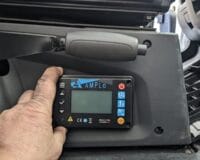
A compressor system gives you the ability to adjust the air pressure from the motorhome, making it much easier to fine-tune the suspension depending on the load.
It’s simply more convenient.
Want to know which system is right for your motorhome? Read our guide to manual vs compressor rear-air suspension.
Can Rear-Air Suspension Be Fitted to Any Motorhome?
Not every motorhome is the same, so it’s not a case of one kit fits everything.
Most modern motorhomes, particularly those built on popular chassis such as the Fiat Ducato, Peugeot Boxer and Ford Transit, have suitable rear-air suspension options available.
But chassis, axle configuration, existing suspension, weight and how the motorhome is being used all need to be considered before choosing a system. Older or less common chassis can need a little more investigation too.
The important thing is fitting the right system for the vehicle and the load it’s carrying, rather than simply choosing a kit because it fits the make and model.
What We Do Differently at Bristol Caravans
For us, fitting rear-air suspension isn’t about bolting a kit onto the back of a motorhome and sending you on your way.
We start with the vehicle — looking at the chassis, axle weights, existing suspension, available space and how you actually use your motorhome.
We also pay attention to the details that matter further down the line. Air lines are routed and protected properly, components are positioned with future maintenance in mind, and the system is set up for the individual vehicle rather than treated as a generic fit.
The aim is a properly integrated installation that works with your motorhome, rather than simply adding another component to it.
Is Rear-Air Suspension Worth It?
If your motorhome regularly carries a fair bit of weight over the rear axle, rear-air suspension can make a noticeable difference.
Bikes, a full garage, extra water and all the usual touring kit soon add up. Without enough support, the rear can sit lower than it should, and you’ll notice it once you’re out on the road.
Rear-air gives the suspension extra support, helping maintain ride height and keeping the motorhome feeling more settled when braking, cornering or travelling over uneven roads.
It’s not just about a more comfortable ride either. When the motorhome is sitting properly under load, it feels more predictable and controlled from behind the wheel.
For many owners, that’s the real benefit. Load up, strap the bikes on and head off without that feeling that the back end is struggling with everything you’ve packed.
It’s about giving the rear suspension the support it needs, keeping the motorhome sitting right and helping it feel as good on the road as it does on the driveway.
The Bottom Line
Rear-air suspension isn’t a magic fix for an overloaded motorhome, and it shouldn’t be sold as one. What it can do is provide additional support to the rear suspension, help maintain a more appropriate ride height under load and give you a more controlled, settled motorhome.
If you’re noticing that your motorhome feels different when it’s fully loaded, the rear is sitting lower than you’d like, or you simply want better support and control, it’s worth looking at what’s actually happening at the rear axle.
At Bristol Caravans, we can assess your motorhome and talk through whether rear-air suspension is suitable, how we’d approach the installation and what you can realistically expect from the upgrade.
Want to find out whether rear-air suspension is right for your motorhome? Get in touch with Bristol Caravans to arrange a FREE assessment.