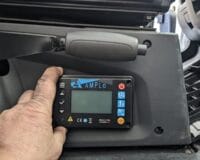
If you’re considering rear air suspension for your campervan or motorhome, you’ll generally come across two options: manual air suspension and compressor-based, fully adjustable air suspension.
How each system works
Both systems use airbags to provide additional support to the rear of the vehicle, helping to improve ride height, stability and handling. The main difference is how you control the air pressure. For many motorhome owners, the convenience and adjustability of a compressor system can make a noticeable difference, particularly when travelling with different loads.
Manual system:
Best for someone who sets their preferred pressure once and generally drives with a similar load.
A basic/manual system uses airbags fitted alongside or in place of the vehicle’s existing rear suspension components. The airbags are connected by air lines to inflation valves, usually accessible at the rear of the vehicle.
The driver or owner:
- Connects an air supply to the valves.
- Adds or releases air to adjust the pressure.
- Sets the pressure according to the vehicle’s load and desired ride height.
- Drives with that pressure until the load changes.
The key point is that the owner adjusts the air pressure manually. There is no onboard compressor or electronic control system doing it for them. This can be a straightforward and cost-effective solution if your vehicle regularly carries a very similar load and you don’t expect to make frequent adjustments.
Compressor/fully adjustable system:
More attractive to someone who regularly changes loads, carries bikes/tow equipment, travels with varying payloads, or wants to adjust the suspension from the driver’s seat.
A compressor-based system uses the same basic principle, airbags support the rear of the vehicle, but adds an onboard compressor and controls.
Instead of having to find an external air source, the driver can:
- Use a control panel or remote inside the cab.
- Activate the compressor to add air.
- Release air when necessary.
- Adjust the left and right sides independently on some systems.
- Fine-tune the suspension to the desired pressure or ride height, depending on the system.
For a touring vehicle, this added control can be particularly useful. Your payload isn’t always the same, you might leave home with a full water tank, bikes and additional equipment, then travel home with a much lighter load.
Being able to make adjustments without leaving the driver’s seat means you can easily keep the suspension set correctly throughout your trip. If the vehicle’s load changes, or you need to adjust the rear clearance, example getting on or off a ferry, the suspension can be altered without having to find an air compressor or service station.
Price
As a general guide, prices can vary depending on the vehicle, chassis, air suspension system and installation requirements.
- Basic/manual systems: around £1,000–£1,500 fitted
- Fully adjustable/compressor systems: around £1,800–£2,500+ fitted
The final price will depend on factors including the vehicle’s rear chassis type, such as Fiat Ducato, Peugeot Boxer, Mercedes Sprinter or an AL-KO-based motorhome, as well as the suspension system; example leaf spring, independent coils or a torsion bar system and workshop labour involved.
While a compressor system costs more initially, it’s worth considering what you’re getting for the additional investment: onboard air, cab-mounted controls and the ability to adjust your suspension whenever your load changes, which makes using your vehicle easier.
How you adjust the air pressure
With a manual system, adjustments require access to the inflation valves and an external source of compressed air.
This isn’t necessarily a problem if you tend to run the vehicle at the same weight all the time. However, it can become inconvenient when you’re touring.
A compressor system makes the process much simpler.
You can adjust the air pressure from inside the vehicle, meaning there’s no need to:
- Find a petrol station with an air compressor.
- Connect an external airline.
- Get underneath or around the vehicle to access valves.
- Guess whether the pressure is correct after changing your load.
For motorhome owners who regularly change what they’re carrying, this can be one of the biggest advantages of going for a fully adjustable system.
Ride comfort
Both manual and compressor-based air suspension systems can deliver a noticeable improvement in ride comfort when correctly specified, installed and adjusted.
Where a compressor system has the advantage is in keeping the suspension correctly set as your vehicle’s load changes.
A motorhome rarely weighs exactly the same on every journey. Bikes, luggage, water, passengers and additional equipment can all change the load on the rear suspension. With a manual system, adjusting the pressure means finding an external air supply and setting the system accordingly.
With a compressor system, you can make those adjustments quickly and easily from inside the vehicle. More load? Add air for additional support. Travelling lighter? Reduce the pressure to suit.
Being able to fine-tune the suspension whenever required makes it easier to maintain the correct ride height and suspension balance, helping your motorhome feel more settled and comfortable whether you’re fully loaded for a long touring trip or travelling with a lighter payload.
For motorhome owners who regularly change their load, that convenience can make a real difference to the day-to-day driving experience.
Handling and stability
Rear air suspension isn’t just about making the ride more comfortable. It can also help improve the way your campervan or motorhome feels and behaves on the road.
A heavily loaded motorhome can sometimes feel less controlled, particularly through corners or when travelling on exposed roads in strong crosswinds. Rear-end sag can also affect the vehicle’s overall stance and how it feels under steering.
By providing additional support to the rear suspension, air suspension can help the vehicle maintain a more consistent ride height and feel more planted on the road.
A compressor-based system gives you greater control over that support. Rather than being limited to a single pressure setting, you can make adjustments when required to suit how the vehicle is being used.
The result is a suspension system that can be adapted to your vehicle, giving you greater control and confidence behind the wheel.
Maintenance and reliability
Like any mechanical system, air suspension needs to be correctly installed and maintained to perform reliably.
The airbags, airlines, fittings, compressor and control system should be checked as part of normal vehicle maintenance, with particular attention paid to any signs of air leaks or damage.
The location of the compressor is also worth considering. Many systems have the compressor mounted underneath the vehicle, where it can be exposed to road dirt, water and spray.
At Bristol Caravans, we fit compressors inside the vehicle wherever practical. This gives the compressor a cleaner and more protected environment, helping to reduce its exposure to the harsh conditions found underneath a motorhome.
A properly installed system, combined with sensible maintenance, can provide reliable service for years of touring.
Which system is right for you?
Both systems have their advantages, and the right choice ultimately depends on how you use your vehicle.
A manual system may suit you if:
- Your vehicle carries a relatively consistent load.
- You rarely need to adjust the suspension.
- Keeping the initial cost as low as possible is your priority.
- You’re happy to use an external air supply when adjustments are needed.
A compressor system may be the better option if:
- Your payload changes regularly.
- You carry bikes, scooters or additional equipment.
- You tow a trailer or other equipment.
- You use your motorhome frequently for touring.
- You want to adjust the suspension from the driver’s seat.
- You value convenience and greater control.
- You want a system that can easily adapt to different loads.
For many motorhome owners, the additional flexibility of a compressor system makes it the more convenient option for everyday touring.
Why choose us?
At Bristol Caravans, we specialise in fitting compressor-based rear air suspension systems to campervans and motorhomes.
We don’t just fit the equipment and send you on your way. We consider the vehicle, its chassis, its typical load and how you use it before recommending the appropriate setup.
One of the key differences in our installations is the location of the compressor. Wherever practical, we install the compressor inside the vehicle, rather than underneath it.
This helps keep it away from road dirt, water and spray, providing a cleaner and more protected environment for one of the most important components of the system.
Our aim is to provide a reliable, practical air suspension system that’s easy to use and suited to the way you actually travel.
If you’re experiencing rear-end sag, poor stability or an uncomfortable ride when your motorhome is fully loaded, get in touch with Bristol Caravans to discuss whether a compressor-based rear air suspension system could be right for your vehicle.