If you want to get your motorhome off-grid for longer, you need three things working together: a lithium leisure battery that lets you use far more of its power, solar panels to top it up while you’re parked, and a DC-to-DC charger that refills it properly while you drive. Fitted as one matched system, this can turn one nervous night away from hook-up into a long weekend or more.
I’m Oakleigh, Director at Bristol Caravans. We’ve been looking after caravans, motorhomes and campervans since 2012, and we’ve been fitting lithium systems since 2021. In this guide I’ll explain, in plain English, why your battery runs flat and what actually fixes it. I’ll also share a real job from our workshop that shows why getting the installation right matters so much.
Why does my motorhome battery go flat after one night?
If you’ve only ever stayed on campsites with electric hook-up, you’ve probably never had to think about your leisure battery. Electric hook-up is the post you plug into on a campsite. It works like a giant extension lead for the whole van, quietly keeping everything charged.
Your leisure battery is the one that runs the “living” side of your motorhome: the lights, the fridge, the water pump, the heating fan and the phone chargers. It’s separate from the engine battery that starts the van.
Most motorhomes come with an older type of leisure battery called lead-acid (or AGM). The catch is that you can only safely use about half of the power it holds. Take it any lower and you shorten its life. So a battery that sounds big on paper runs out surprisingly quickly once you’re away from hook-up. That’s why so many of our customers tell us the same thing: one night off-grid, then the lights start to dim.
The three upgrades that keep your motorhome off-grid for longer
Think of your electrics like a bucket of water. The battery is the bucket. Everything you switch on is a hole in the bottom. To stay away for longer, you need a bigger bucket and better ways of filling it back up.
- A lithium leisure battery gives you a much bigger bucket.
- Solar panels give you a gentle tap that runs whenever it’s light outside.
- A DC-to-DC charger gives you a powerful hose that fills the bucket every time you drive.
Each one helps on its own, but the real magic happens when all three are fitted to work together.
Step one: upgrade to a lithium leisure battery
What makes lithium different
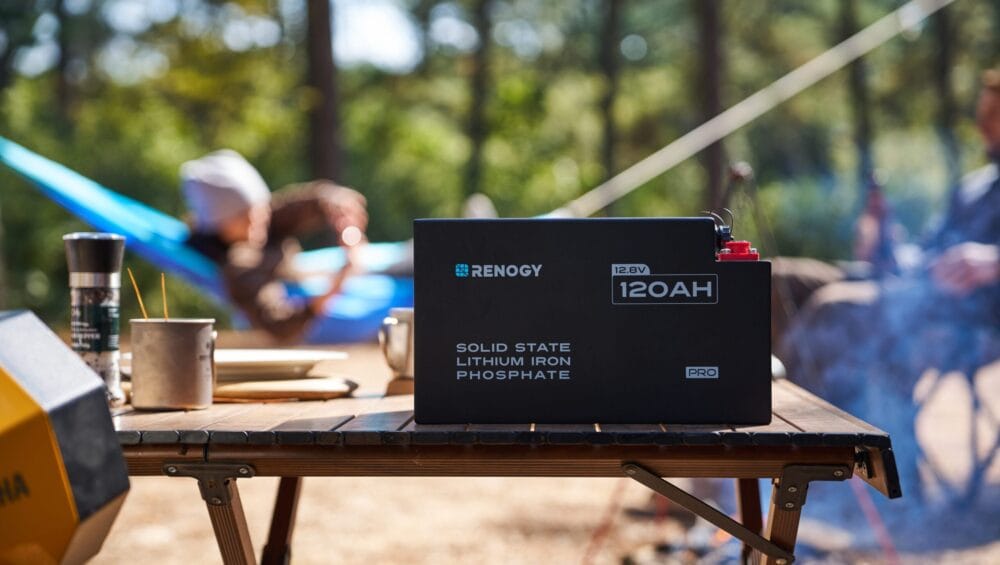
Lithium is a newer type of leisure battery, and for off-grid trips it really is a game changer. Here’s why our customers love it:
- You can use most of the power it holds, not just half.
- It’s around a third of the weight of a traditional lead-acid battery, which helps with your payload (how much weight your van is allowed to carry).
- It recharges much faster, up to 40% in 30 minutes with the right charging equipment.
- It’s maintenance free, and we can usually fit it under a seat so you don’t lose any storage space.
Why lithium isn’t just a battery swap
This is the bit I most want newer owners to understand. You can’t just buy a lithium battery online, take the old one out and drop the new one in. Lithium charges differently from lead-acid, so everything that charges it needs to be set up for lithium. That includes your mains charger, your solar controller and the charger that works while you drive. If they’re not, the battery may never fill up properly, or the system may simply not work.
Lithium batteries can also release a huge amount of power very quickly if something goes wrong. That’s why we fit a Class T fuse right next to the battery as standard. A Class T fuse is a very fast safety fuse that cuts the power almost instantly if there’s a short circuit (that’s when electricity takes a dangerous shortcut). Not every installer includes one as standard. We do, every time.
Step two: add solar panels to top up while you’re parked
Solar panels sit on your roof and turn daylight into electricity for your leisure battery. While you’re parked up enjoying the view, they’re quietly putting power back in.
I’ll be honest with you, because the battery shops often aren’t. Solar is brilliant, but it isn’t magic in a British winter. The days are short and often grey, so a panel will make much less power in December than in June. Solar helps you stay away from hook-up for longer by slowing down how fast your battery drains, but in winter it works best as part of a system, not on its own.
That’s why our lithium kits pair the battery with a 200W solar panel and a proper charger for when you’re on the move. You can find out more on our motorhome solar panels page.
Step three: charge while you drive with a DC-to-DC charger
A DC-to-DC charger (sometimes called a battery-to-battery charger) is a box that takes power from your engine while you’re driving and uses it to charge your leisure battery properly.
Your engine has an alternator, which makes electricity while the engine runs, a bit like a dynamo on a bike. Lithium batteries are hungry and try to gulp down power very fast. Without a DC-to-DC charger in between, that can put a lot of strain on an alternator designed for older batteries. A good DC-to-DC charger controls the flow and charges the lithium battery exactly the way it likes.
For newer owners heading off to a rally or a weekend of wild camping, this makes a huge difference. Every drive between stops becomes a chance to refill your battery, even on a cloudy day when the solar panel is struggling.
A real job from our workshop: the charger that wasn’t charging
Here’s a story that shows exactly why a professional installation matters.
A customer came to us with a motorhome they had recently bought. As a new owner, they had no history of what the previous owner had changed or added. They booked in for a lithium upgrade to get off-grid for longer.
During the installation we took out the front seats, which is where a lot of the van’s wiring lives. Underneath, we found a DC-to-DC charger that the previous owner had paid to have fitted. On paper, the van already had charging while driving. In reality, it had been poorly installed. It wasn’t dangerous, but it simply wasn’t right. It wasn’t connected properly, and it wasn’t charging anything.
Nobody would have known from looking at it. The customer could have driven for hours believing their leisure battery was being topped up, only to find it flat at the end of the day.
We removed the old unit, modified the loom (that’s the bundle of wires that runs through the vehicle, like the van’s nervous system) and fitted new parts. Then we tested everything to make sure the whole system was charging as it should. The result was a fully working setup and a very happy customer.
It’s a good reminder that it isn’t enough just to have the right parts. They have to be fitted and connected so they work together as one system.
Why we don’t just sell you a battery in a box
We’re often asked if we’ll just sell the battery on its own. The answer is no, and here’s why.
- A lithium battery has to be matched to the right chargers, wiring and safety protection to work properly.
- We design and install the complete system, so we can warranty the whole thing, not just one part.
- You have one team responsible for the installation, setup and performance of your off-grid power.
- If you camp in winter, we can fit self-heating lithium batteries that warm themselves up before charging in cold weather.
And if anything ever goes wrong, you won’t be talking to a chatbot on a website. You’ll speak to one of our team, and we’ll look after you.
We’re a Renogy Approved installer, an AWS Approved Workshop and a member of the MCEA. We’re proud to have a 4.8-star Google rating from over 260 reviews.
How long could you stay off-grid with our Essential lithium kit?
Our lithium starter kit is called Off-Grid Essential. It’s designed for newer owners who use everyday 12V comforts like lights, the fridge, the water pump, the heating fan, the TV and phone charging. It includes:
- A 200Ah lithium leisure battery
- A 200W solar panel
- 50A charging while you drive
- 35A charging when you are on hook-up
- Professional installation, integrated with your motorhome’s existing electrics
It gives you a minimum of four nights off-grid. That’s a whole winter weekend without having to worry about finding an electric hook-up. Off-Grid Essential starts at £4,370 fully installed. You can see the full details on our Off-Grid Essential kit page.
If you’d like to run 230V mains appliances such as a coffee machine or a hairdryer, we have bigger kits too. Our blog on the best motorhome lithium battery setup for off-grid travel compares the options.
Is lithium worth it if I’m new to motorhoming?
In my experience, yes, if you want to explore beyond campsites. Wild camping spots, rallies, festivals and quiet farm stopovers usually have no hook-up at all. Being able to stay several nights without worrying about the battery gives you a completely different kind of freedom.
My advice is simple. Don’t rush into buying a cheap battery online and trying to work out a complicated electrical system yourself. Getting it wrong can leave you with a system that doesn’t work, or an expensive problem that needs putting right. Talk to a workshop that installs lithium every week and can look at your van properly first.
About me
I’m Oakleigh Wood, Director of Bristol Caravans, based near Junction 16 of the M5. I’ve spent years helping owners get more from their caravans, motorhomes and campervans, and I love seeing customers head off on adventures they couldn’t have managed before. You can find out more about me on my LinkedIn profile.
Ready to get your motorhome off-grid for longer?
If you’re fed up with only getting one night away from hook-up, we’d love to help. Have a look at our latest offers. If you book before Christmas, you can lock in our current 2026 lithium pricing. Terms apply: the job must be completed by 24 December 2026, and vehicles must be under 15 years old.
You can also watch my short video on going off-grid with lithium, or call the team on 01454 612893 for a free personal assessment and quote. When you come in for an upgrade, you can even enjoy a free overnight stay with us.
Hope to see you soon.