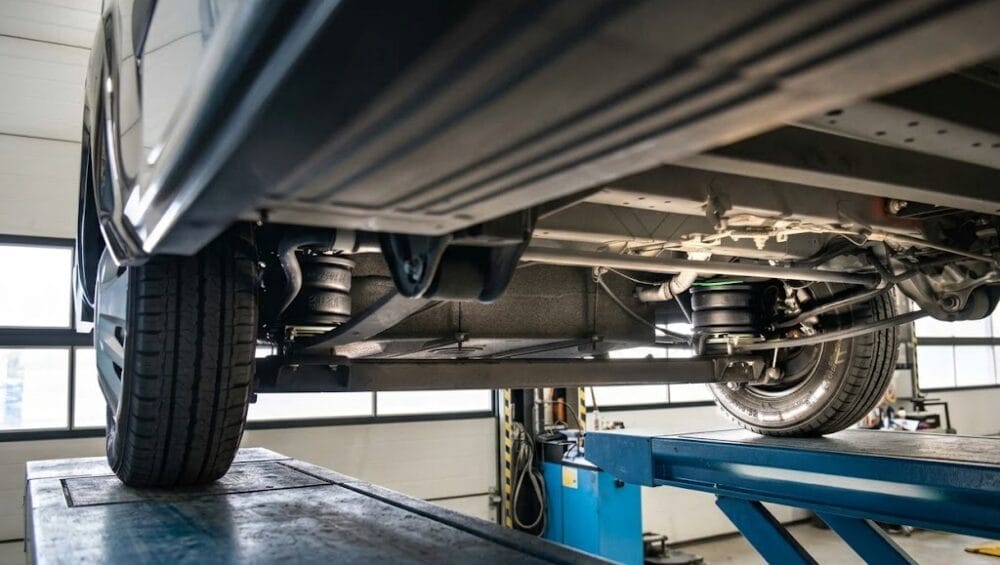
A motorhome’s rear suspension works hard. Heavy leisure loads, water tanks, bike racks, tow bars and extended rear overhangs can place significant demands on the rear axle and springs.
If your motorhome is sitting low at the rear, feels unsettled under load or is regularly reaching the limits of its suspension travel, it could be time to look at the condition of the original suspension and whether rear-air suspension is the right upgrade.
Why Does a Motorhome Rear Suspension Sag?
Most motorhomes use a commercial-vehicle chassis with rear leaf springs. These are designed to carry a range of loads, but prolonged loading can cause the springs to lose some of their original ride height and spring rate.
There are several factors to consider:
Heavy Rear-Axle Loading
Motorhomes often carry a considerable amount of weight behind the rear axle. This includes:
- Water and waste tanks
- Batteries
- Gas bottles
- Awnings
- Bike racks and bikes
- Storage boxes
- Camping equipment
The rear axle load is more important than simply looking at the motorhome’s overall weight. A vehicle can be within its gross vehicle weight while still approaching or exceeding its rear-axle limit.
Rear Overhang
The longer the distance between the rear axle and the load, the greater the leverage acting on the rear suspension.
This is particularly relevant to motorhomes with long rear overhangs. A relatively modest load positioned well behind the axle can have a significant effect on the suspension.
Spring Fatigue
Leaf springs can fatigue over time, particularly on vehicles that spend much of their life heavily loaded.
If the rear ride height has progressively reduced, the springs may no longer be providing the same level of support they did when new.
What Happens When the Rear Suspension Sags?
Excessive sag isn’t just about how the motorhome looks.
Reduced ride height can reduce available suspension travel and increase the likelihood of the suspension reaching its bump stops. It can also alter the vehicle’s handling characteristics and, depending on the extent of the sag, affect headlamp aim and other vehicle dynamics.
Before fitting an upgrade, the existing springs, dampers, bushes and mounting points should be inspected to identify any underlying mechanical issues.
How Can Rear-Air Suspension Help?
Rear-air suspension uses air springs to provide additional or replacement springing, depending on the system fitted.
For motorhomes, the ability to adjust the air pressure is particularly useful where the vehicle’s load varies between journeys.
Benefits of Rear-Air Suspension
- Adjustable rear ride height
- Additional support for heavy loads
- Improved suspension travel
- Reduced rear-end sag
- Improved load control
- Greater ride-height consistency
- Reduced suspension bottoming
- Adjustable support for changing payloads
- Potential improvement in ride comfort and stability
The correct setup depends on the chassis, axle load, existing suspension and intended use of the motorhome.
Air-Assisted or Full Air Suspension?
These are not the same system.
Air-assisted suspension adds air springs alongside the vehicle’s existing leaf springs. The original springs continue to provide the primary mechanical support, while the air bags provide additional load assistance.
Full air suspension replaces the original springing arrangement with an air-based system and is a more extensive conversion.
For many motorhomes, air assistance provides a practical way of increasing suspension support without replacing the entire rear suspension system.
When Should You Consider an Upgrade?
Rear-air suspension is worth investigating if your motorhome:
- Sits noticeably low at the rear
- Regularly carries a high rear-axle load
- Has a long rear overhang
- Frequently bottoms out
- Feels unsettled when heavily loaded
- Experiences significant changes in ride height between loads
- Requires greater control over rear ride height
However, air suspension should not be used to compensate for an overloaded vehicle.
It does not automatically increase the vehicle’s legal payload or axle weight rating. Your motorhome must remain within its permitted gross and axle weights.
Get Expert Advice from Bristol Caravans
If you’re experiencing rear suspension sag or looking to improve your motorhome’s load carrying performance, we can help assess the vehicle and identify the appropriate suspension solution.
We’ll consider the chassis, existing suspension, rear-axle loading and intended use before recommending an upgrade.
👉 If you’re interested in coming in for a FREE assessment to discuss rear-air suspension for your motorhome, contact us today.