One of the most common questions we get asked is, “How much does a lithium system weigh?”
The answer is simple: the total weight of a lithium system is the combined weight of all the individual components. While the battery is the heaviest single item, a complete off-grid power system also includes charging equipment, an inverter, solar panels, wiring, and installation hardware.
Knowing the overall system weight is particularly important for caravans, motorhomes, campervans and 4WD touring vehicles, where payload limits can make a significant difference.
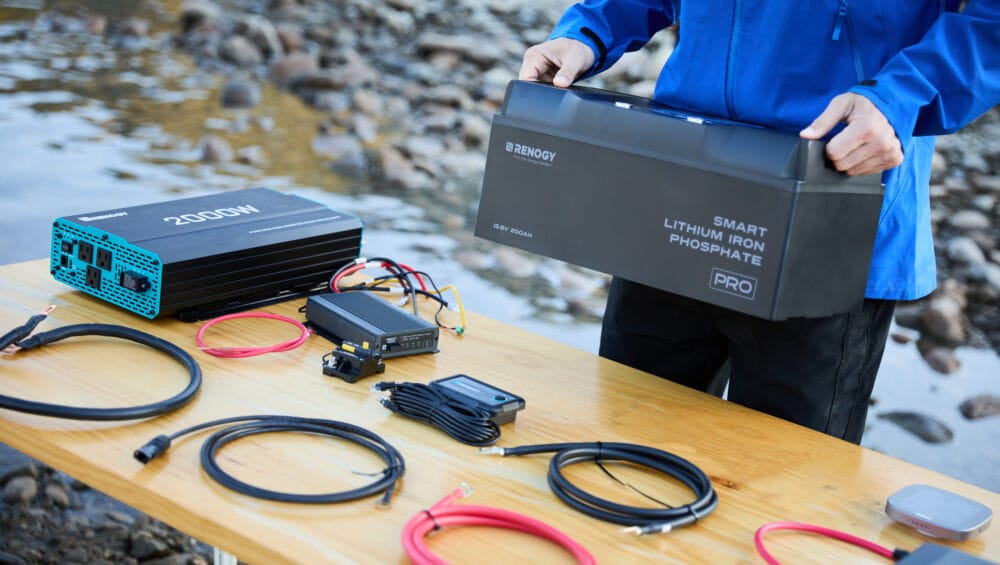
Below is an example of a typical Renogy-based lithium power system.
Renogy Under Seat 200Ah Lithium Battery
The Renogy Under Seat 200Ah LiFePO₄ battery weighs approximately 23kg. This is the largest single component within the system while providing 2.56kWh of usable energy.
Weight: 23kg
Renogy 2000W Pure Sine Wave Inverter
A Renogy 2000W Pure Sine Wave Inverter weighs approximately 5kg, converting your 12V battery power into 230V AC power for household appliances.
Weight: 5kg
Renogy 200W ShadowFlux Solar Panel
The Renogy 200W ShadowFlux Anti-Shading Solar Panel weighs 10.81kg, making it a lightweight yet powerful option for charging your battery while off-grid.
Weight: 10.8kg
Renogy MPPT Solar Charge Controller
Replacing the original NDS regulator with a Renogy equivalent, a Renogy MPPT solar charge controller typically weighs around 0.5kg.
Weight: 0.5kg
Renogy AC/DC Battery Charger (230V)
The Renogy AC to DC battery charger allows you to charge your lithium battery from mains power when connected to a campsite or home supply.
Weight: Approximately 3kg
Renogy DC-DC Charger
The Renogy DC-DC charger charges your lithium battery from your vehicle’s alternator while driving.
Weight: Approximately 4kg
Wiring Loom and Installation Components
No lithium system is complete without the supporting components, including:
- Battery cables
- Wiring loom
- Circuit protection (fuses and breakers)
- Bus bars
- Battery isolators
- Mounting brackets and hardware
While these items are individually light, together they typically add 2–5kg depending on the installation.
Total System Weight
Using the example above, the complete system weighs approximately:
- Battery – 23kg
- Inverter – 5kg
- Solar Panel – 10.8kg
- Solar Charge Controller – 0.5kg
- AC/DC Charger – 3kg
- DC-DC Charger – 4kg
- Wiring & Installation Components – 2–5kg
Estimated Total Weight: Approximately 48–51kg
Final Thoughts
Although a complete lithium power system weighs around 50kg, it’s important to compare this with a traditional lead-acid setup. Achieving the same usable capacity with AGM or lead-acid batteries often requires multiple batteries, resulting in a significantly heavier system.
Lithium batteries provide more usable energy, charge faster, last considerably longer, and deliver a much better power-to-weight ratio. For anyone upgrading a caravan, motorhome, campervan or off-grid vehicle, they remain one of the best investments for reducing weight while increasing performance.
👉 Contact us today: contact us
📞 01454 612 893 | 📧 service@bristolcaravans.com