If you’re considering upgrading your motorhome, campervan or caravan’s electrical system, one of the most common questions is:
Can I replace my leisure battery with a lithium battery?
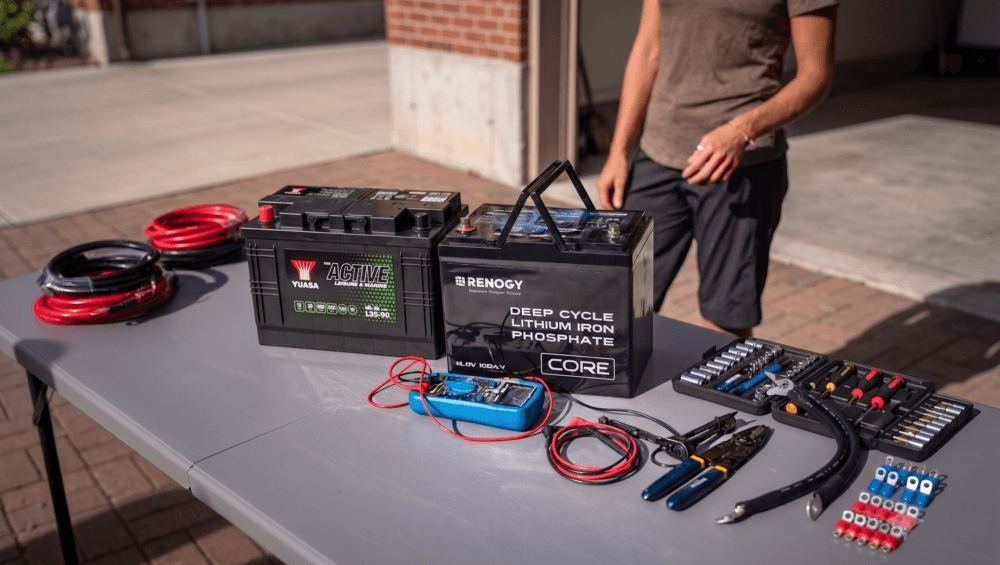
The short answer is yes. In most cases, you can replace a traditional lead-acid, AGM or gel leisure battery with a lithium (LiFePO4) battery. However, there are a few important factors to consider to ensure your new battery performs safely and efficiently.
In this guide, we’ll explain everything you need to know before making the switch.
Why Upgrade to a Lithium Battery?
Lithium batteries have become increasingly popular among motorhome owners, especially those who enjoy off-grid adventures and wild camping.
Compared with traditional leisure batteries, lithium batteries offer several advantages:
- Much longer lifespan, often lasting over 10 years.
- Significantly lighter weight.
- Faster charging times.
- More usable capacity.
- Consistent power output, even as the battery discharges.
- Virtually maintenance-free.
For many travellers, upgrading to lithium means spending more time enjoying their motorhome and less time worrying about battery power.
Can I Simply Swap the Batteries?
Physically, replacing a leisure battery with a lithium battery is often straightforward, as many 12V lithium batteries are designed to fit the same battery compartment.
However, the electrical system also needs to be considered.
Before installing a lithium battery, you should check:
- Your onboard battery charger.
- Your solar charging system.
- Your alternator charging setup.
- Any battery monitoring equipment.
While some modern motorhomes are already compatible with lithium batteries, older vehicles may require a few upgrades.
Will My Existing Battery Charger Work?
This is one of the biggest questions people ask.
Some modern smart chargers include a dedicated lithium charging profile and will work perfectly.
Older chargers designed only for lead-acid or AGM batteries may not fully charge a lithium battery or could reduce its lifespan over time.
If your charger doesn’t support lithium batteries, replacing it with a lithium-compatible charger is usually recommended.
Do I Need a DC-DC Charger?
It depends on your motorhome.
Many newer vehicles have smart alternators that reduce charging voltage to improve fuel efficiency. These systems often won’t charge a lithium battery correctly without a DC-DC charger.
A DC-DC charger regulates the power coming from your alternator and delivers the correct charging profile for your lithium battery.
If your motorhome has a conventional alternator, you may not need one, but it’s always worth checking your vehicle’s charging system before upgrading.
What About Solar Panels?
If your motorhome already has solar panels, you’ll also need to check your solar charge controller.
Many modern MPPT controllers can simply be switched to a lithium charging profile.
Older PWM controllers or basic solar regulators may need replacing to ensure your battery charges safely and efficiently.
Can I Keep My Existing Lead-Acid Battery?
Mixing lithium and lead-acid batteries in the same battery bank is generally not recommended.
The two battery types charge and discharge differently, which can lead to reduced performance and shortened battery life.
If you’re upgrading, it’s usually best to replace your existing leisure battery completely with lithium rather than trying to run both together.
Is Lithium Safe?
Quality lithium leisure batteries use LiFePO4 (Lithium Iron Phosphate) chemistry, which is considered one of the safest lithium battery technologies available.
Most also include a built-in Battery Management System (BMS), which helps protect the battery against:
- Overcharging
- Over-discharging
- Short circuits
- Excessive current
- High and low temperatures
Choosing a reputable manufacturer is essential, as the quality of the BMS plays a major role in both safety and performance.
Is It Worth the Extra Cost?
Lithium batteries typically cost more upfront than AGM or lead-acid batteries.
However, many owners find the long-term value outweighs the initial investment because lithium batteries:
- Last several times longer.
- Recharge much faster.
- Deliver almost all of their rated capacity.
- Require little to no maintenance.
- Reduce overall vehicle weight.
If you regularly travel off-grid or rely on your leisure battery for extended periods, the upgrade can make a noticeable difference to your camping experience.
How Do I Know What Size Lithium Battery I Need?
The right battery depends on how you use your motorhome.
For example:
- 100Ah lithium battery – Suitable for weekends away and light electrical use.
- 200Ah lithium battery – Ideal for longer trips, wild camping and running multiple appliances.
- 300Ah+ battery bank – Best for extended off-grid living or high-power equipment.
Because lithium batteries allow much deeper discharge than lead-acid batteries, many people find they can install a smaller lithium battery while still enjoying more usable power.
Final Thoughts
Replacing your leisure battery with lithium is one of the most worthwhile upgrades you can make to your motorhome or campervan.
Although you may need to check your charger, solar controller or alternator charging system, most installations are relatively straightforward. Once installed, you’ll benefit from faster charging, more usable energy, a lighter electrical system and a battery that could last for many years.
If you’re planning more off-grid adventures or simply want a more reliable power supply, switching to lithium is an investment that many motorhome owners wish they’d made sooner.
👉 Contact us today: contact us
📞 01454 612 893 | 📧 service@bristolcaravans.com