Written by Oakleigh Wood
Want to spend longer off-grid in your motorhome without worrying about your battery running flat? A lithium leisure battery upgrade could be the answer, but choosing the right setup isn’t simply a case of buying the biggest battery available.
Your ideal system depends on what you want to power, how often you use it and how long you typically spend away from a mains hook-up. Get the balance right and you’ll have the freedom to tour on your terms, without paying for capacity you don’t need.
Here’s what to consider before choosing your setup.
Start with how you use your motorhome
Before looking at battery sizes, think about your typical touring routine.
If you’re mainly running lights, a fridge, water pump, heating fan and charging your phones, your energy demands may be relatively modest. But introduce a coffee machine, air fryer, hair dryer or induction hob and things change quickly.
These appliances can draw significantly more power than your everyday 12V equipment, so your battery and inverter need to be sized accordingly.
It’s also worth considering how long you’re off-grid. A single overnight stop is very different from spending several days parked up without driving or connecting to hook-up.
The key question isn’t just how much power you use, but how much you use between charging opportunities.
Amp-hours, watts and inverters: what’s the difference?
Battery specifications can look a little confusing, so let’s break down the essentials.
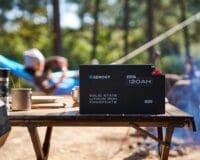
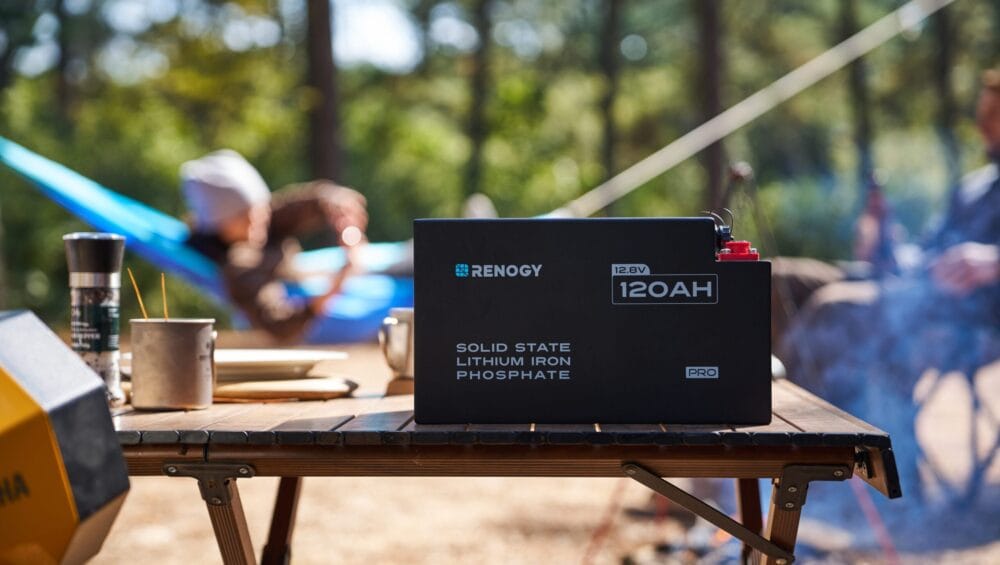
- Amp-hours (Ah) tell you the battery’s capacity. A 200Ah battery stores more energy than a 100Ah battery, but usable capacity depends on the battery’s specifications and operating conditions.
- Watts (W) measure the power an appliance draws while running. The higher the wattage, the more energy it typically consumes over a given period.
- Kilowatt-hours (kWh) measure energy consumption over time. For example, a 1,500W appliance running for 20 minutes uses 0.5kWh, before accounting for conversion losses.
- Inverter output (kW) determines how much 230V power your system can supply at once. A larger inverter can handle higher loads, provided the battery and installation can support them.
Think of battery capacity as your fuel tank and the inverter as the system that delivers power to your appliances. You need enough stored energy to last, as well as enough output to run the equipment you want to use.
It’s also important to remember that running high-powered appliances can drain a battery surprisingly quickly. A larger inverter doesn’t give you more stored energy; it simply allows you to power more demanding appliances.
Don’t overlook charging
A bigger battery is only part of the equation. You also need to put that energy back in.
There are three main ways to recharge a motorhome lithium battery:
- Solar panels: generate power during daylight, with output varying according to the season, weather, shading and panel orientation.
- Drive charging: replenishes the leisure battery while travelling, using a suitable DC-to-DC charging system.
- Mains hook-up: provides charging when you’re connected to a campsite or another suitable mains supply.
Your touring habits make a real difference here. If you drive regularly, you may have plenty of opportunities to recharge. If you prefer to park up for several days, particularly in winter, you’ll need to pay closer attention to your energy consumption and available solar generation.
A well-designed system balances battery capacity, appliance demand and charging input. Getting all three right is what makes off-grid touring work.
So, which lithium setup is right for you?
At Bristol Caravans and Motorhomes, our three off-grid kits offer different levels of capacity and capability, depending on how you travel.
Off-Grid Essential: simple, reliable 12V power
With a 200Ah lithium battery, 200W solar panel, 50A drive charging and 35A hook-up charging, Essential suits those who mainly use their everyday 12V appliances and want to spend longer away from mains electricity. It doesn’t include an inverter, making it a good starting point if 230V appliances aren’t a priority.
Off-Grid Plus: more flexibility with 230V appliances
Plus includes the same 200Ah battery and charging specification as Essential, but adds a 2kW inverter. It’s ideal if you want the convenience of occasionally running compatible appliances such as a coffee machine or air fryer, within the system’s power limits.
Off-Grid Ultimate: for more demanding off-grid living
With a 500Ah lithium battery, 3kW inverter, 200W solar panel, 60A drive charging and 35A hook-up charging, Ultimate provides a much larger energy reserve and greater inverter output. It’s suited to those with higher power demands, such as remote working, induction cooking or extended stays away from hook-up.
The best option comes down to your actual usage, not simply the biggest numbers on a specification sheet.
Is lithium the right upgrade for you?
Lithium batteries offer high usable capacity relative to their weight, efficient charging and excellent flexibility for off-grid touring. They’re particularly worthwhile if you regularly stay away from hook-up or want to run appliances that would be impractical with your existing setup.
However, a successful upgrade involves more than swapping batteries. Your charger, solar controller, drive charging system, cabling and protective devices all need to be suitable for the new installation.
That’s why it’s worth looking at the whole system before making a decision.
Not sure how much battery capacity or inverter power you need? Bristol Caravans and Motorhomes can help you work out the right setup for your vehicle, appliances and touring style.
Explore our Off-Grid Essential, Off-Grid Plus and Off-Grid Ultimate kits, or get in touch to discuss your requirements.
The aim is simple: more freedom off-grid, with a system that works for the way you travel.