If your motorhome battery is not charging properly, it can quickly ruin a trip. Flat leisure batteries mean no lights, no water pump, no heating controls and no off-grid freedom. Fortunately, most charging problems are caused by a handful of common issues that can often be diagnosed without specialist tools.
In this guide, we explain the most common reasons why a motorhome battery is not charging, how to identify the fault and what you can do to fix it.
Why Is My Motorhome Battery Not Charging?
A motorhome battery may stop charging because of:
- A faulty charger or hook-up connection
- Blown fuses
- Damaged wiring
- A failing leisure battery
- Solar charging faults
- Split charge relay problems
- Alternator issues
- Battery isolation switches being turned off
- Corrosion on terminals
- Incorrect battery settings on modern chargers
The exact cause depends on whether it fails to charge on electric hook-up, while driving or through solar panels.
Signs Your Motorhome Battery Is Not Charging Properly
Before troubleshooting, look for these common warning signs:
- Interior lights becoming dim
- Battery voltage dropping quickly
- Control panel showing low voltage
- 12V appliances not working correctly
- Battery warning lights appearing
- Solar panel display showing no charge
- Battery not charging while driving
- Hook-up connected but battery percentage not increasing
If your battery repeatedly goes flat, the issue should be investigated quickly because deep discharge can permanently damage leisure batteries.
Check the Battery Voltage First
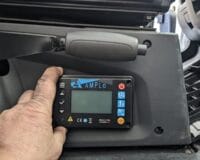
The easiest way to diagnose a charging issue is with a multimeter.
A healthy leisure battery should normally read:
- 12.6V to 12.8V when fully charged
- Around 12.2V at roughly 50% charge
- Below 12V indicates a heavily discharged battery
When charging:
- Electric hook-up chargers usually show 13.6V to 14.4V
- Solar charging may vary depending on sunlight
- Alternator charging should often reach 14V+
If voltage does not rise when connected to a charging source, there is likely a charging fault somewhere in the system.
Common Reasons a Motorhome Battery Is Not Charging (In more detail)
1. Faulty Electric Hook-Up Connection
One of the most common causes is a failed mains connection.
Check:
- The campsite power supply
- Hook-up cable condition
- Tripped RCDs or breakers
- Loose plug connections
- Damaged sockets
Sometimes the issue is simply a faulty hook-up lead.
2. The Leisure Battery Has Reached the End of Its Life
Motorhome leisure batteries do not last forever.
Typical lifespan:
- AGM batteries: 4 to 7 years
- Lead-acid batteries: 3 to 5 years
- Lithium batteries: 10+ years
Signs of battery failure include:
- Battery charging very slowly
- Voltage dropping rapidly
- Battery becoming hot while charging
- Swollen battery casing
- Inability to hold charge overnight
If your battery is old, replacement may be the only solution.
3. Blown Battery Fuse
Many motorhomes have inline fuses between the charger, solar controller, and battery.
A blown fuse can completely stop charging.
Check:
- Main battery fuse
- Solar controller fuse
- Split charge relay fuse
- Charger output fuse
Always replace fuses with the correct amperage rating.
4. Solar Panels Are Not Charging the Battery
If your solar system is not working properly, possible causes include:
- Dirty solar panels
- Faulty solar charge controller
- Loose wiring
- Blown solar fuse
- Incorrect battery type settings
- Poor sunlight conditions
Check whether the solar controller display shows incoming charge current.
5. The Split Charge Relay Has Failed
The split charge relay allows your alternator to charge the leisure battery while driving.
If this relay fails:
- The engine battery may charge normally
- The leisure battery remains flat
- Voltage will not increase while driving
This is a common issue on older motorhomes and campervans.
6. Alternator Problems
A faulty alternator can prevent both starter and leisure batteries from charging.
Common symptoms include:
- Dashboard battery warning light
- Dim headlights
- Electrical systems behaving erratically
- Battery draining while driving
A garage can quickly test alternator output.
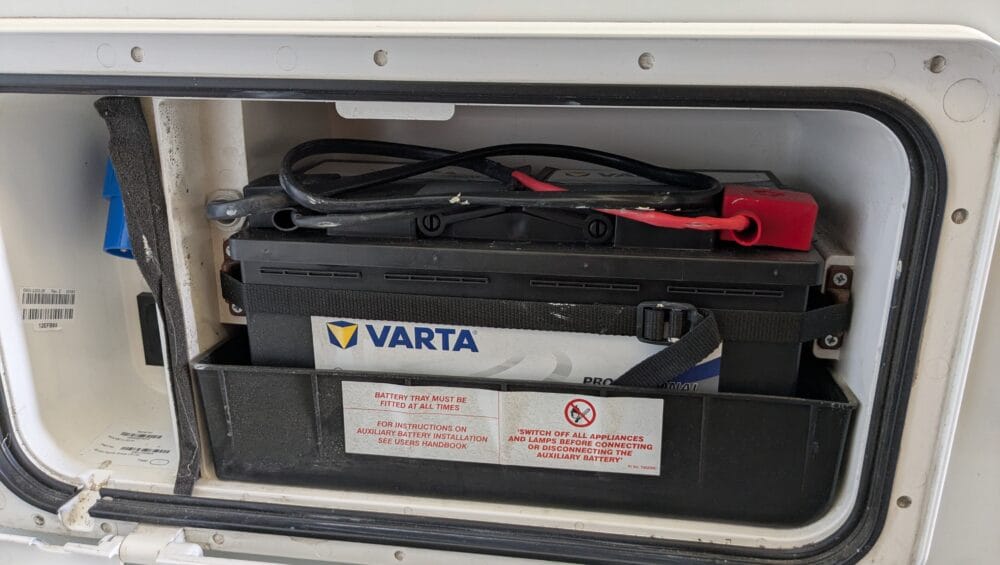
7. Corroded or Loose Battery Terminals
Poor electrical connections can stop charging current reaching the battery.
Inspect for:
- White or green corrosion
- Loose clamps
- Frayed cables
- Burn marks
- Damaged connectors
Clean terminals carefully and ensure all connections are tight.
8. Battery Isolation Switch Is Off
Some motorhomes have a battery isolation or master cutoff switch.
If switched off accidentally:
- Charging systems may be disconnected
- 12V systems may stop working
- Solar charging may not reach the battery
This simple issue is surprisingly common after winter storage.
Why Is My Motorhome Battery Not Charging on Hook-Up?
If the battery does not charge when plugged into mains electric, check:
- Consumer unit breakers
- Onboard battery charger operation
- Hook-up cable
- Internal charger fuses
- Charger cooling fan operation
- Charger settings for AGM, GEL, or lithium batteries
Modern smart chargers may refuse to charge heavily damaged batteries.
Why Is My Motorhome Battery Not Charging While Driving?
If charging only fails while driving, the likely causes are:
- Faulty split charge relay
- Failed DC-DC charger
- Damaged alternator wiring
- Blown fuse between starter and leisure battery
- Smart alternator compatibility issues
Modern Euro 6 vehicles often require a DC-DC charger for proper leisure battery charging.
Can a Completely Flat Leisure Battery Recover?
Sometimes, lead-acid batteries left flat for extended periods often suffer permanent sulphation damage.
However:
- AGM batteries may recover if recharged quickly
- Lithium batteries often include low-voltage protection systems
- Smart chargers sometimes restore lightly sulphated batteries
If the battery repeatedly fails after charging, replacement is usually more cost-effective.
How to Prevent Motorhome Battery Charging Problems
To avoid future issues:
- Keep batteries fully charged during storage
- Use a quality smart charger
- Clean battery terminals regularly
- Check electrolyte levels on wet batteries
- Avoid deep discharging lead-acid batteries
- Monitor solar charging performance
- Test voltage regularly
- Disconnect parasitic loads during winter
Proper maintenance can significantly extend battery lifespan.
Frequently Asked Questions
Why is my motorhome leisure battery draining so fast?
This is often caused by an old battery, hidden power drains, poor charging, or faulty appliances.
Should my motorhome battery charge while driving?
Yes. Most motorhomes charge the leisure battery through the alternator while driving.
How do I know if my leisure battery is dead?
If voltage drops quickly after charging or the battery cannot power appliances normally, it may have failed.
Can solar panels fully charge a motorhome battery?
Yes, under good conditions and with a correctly sized setup.
Final Thoughts
If your motorhome battery is not charging, the problem is usually related to the charger, wiring, alternator, split charge system or the battery itself. Starting with simple checks like voltage testing, fuse inspection, and terminal cleaning can often save time and money.
Regular battery maintenance and proper charging habits are the best ways to avoid breakdowns and expensive replacements, especially if you enjoy off-grid motorhome travel.
👉 Book for your assessment today: contact us
📞 01454 612 893 | 📧 service@bristolcaravans.com