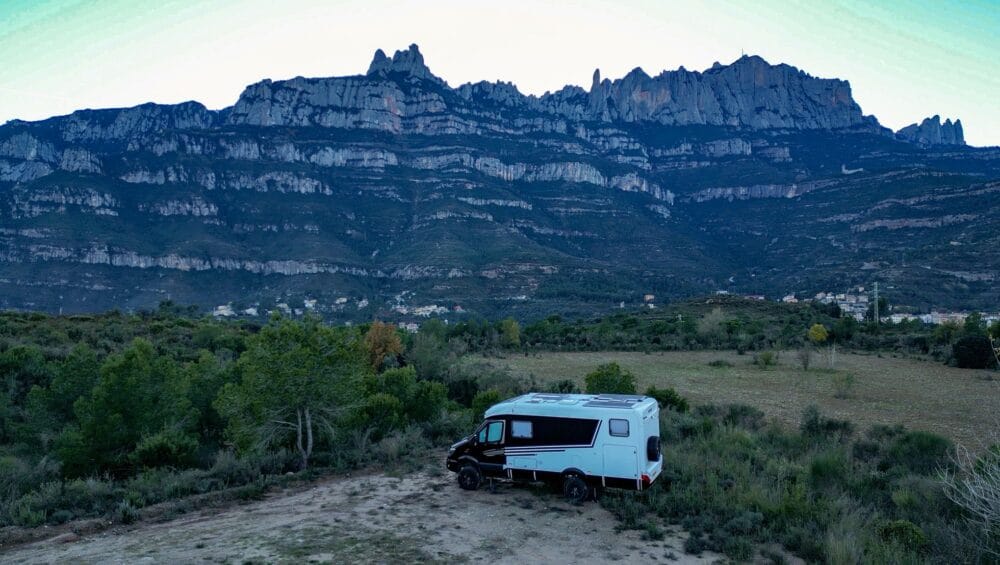
Travelling off-grid in a motorhome, often called wild camping allows you to stay in remote locations without relying on campsite electric hook-ups. With the right setup, your motorhome can generate its own electricity, store water and run essential appliances for days or even weeks.
In this guide, we’ll explain how to make your motorhome off-grid, including the key upgrades that allow you to stay self-sufficient on the road.
1. Upgrade to a Lithium Leisure Battery
The most important upgrade for off-grid motorhome travel is your battery system.
Traditional lead-acid or AGM leisure batteries work but lithium batteries offer significant advantages. Lithium batteries can be discharged much deeper, recharge faster and typically last far longer than older battery technologies.
Many experts recommend starting with around a 150Ah lithium battery for campervans or motorhomes, which can dramatically increase the time you can stay off-grid.
Benefits of lithium batteries include:
- Faster charging from solar or alternator
- Longer lifespan
- More usable battery capacity
- Reduced weight compared to lead-acid batteries
For motorhome owners who want to camp off-grid regularly, upgrading the battery bank is usually the first step before installing solar panels or additional equipment.
2. Install Solar Panels on Your Motorhome
Once you have sufficient battery storage, the next step is generating your own power.
Solar panels are one of the most effective ways to recharge your leisure batteries while travelling. Even in cloudy weather, solar panels can still produce electricity because they rely on daylight rather than heat.
Typical solar setups include:
- 100–150W systems for occasional off-grid travel
- 300–400W systems for longer off-grid stays or higher power use
Solar systems normally include:
- Roof-mounted solar panels
- Solar charge controller (preferably MPPT)
- Battery bank
- Monitoring system
MPPT controllers are particularly effective, as they can produce up to 30% more usable power than older PWM controllers, which is helpful in the UK’s changing light conditions.
3. Add an Inverter for 230V Appliances
Most motorhomes run on 12V electrical systems, which power lights, pumps and basic appliances. However, many household devices require 230V mains electricity.
An inverter converts your motorhome’s battery power into 230V AC electricity so you can run devices like:
- Laptops
- TVs
- Coffee machines
- Charging devices
When choosing an inverter, it’s important to consider power consumption. High-power appliances such as kettles, microwaves or hair dryers can drain batteries very quickly when you are off-grid.
4. Reduce Power Usage
Going off-grid isn’t just about generating electricity, it’s also about using power efficiently.
One of the easiest upgrades is switching to LED lighting, which uses far less power than traditional bulbs. In some cases, LED upgrades can reduce lighting power consumption by 75–90%.
Other ways to save power include:
- Using 12V appliances where possible
- Avoiding high-wattage devices
- Charging devices while driving
- Monitoring battery usage
Small changes like these can significantly extend the amount of time you can stay off-grid.
5. Ensure You Have Gas for Heating and Cooking
Electric heating or cooking is rarely practical when travelling off-grid because it consumes large amounts of power.
Instead, most motorhome owners rely on gas systems for cooking, heating, and refrigeration. Gas appliances are extremely efficient and allow you to preserve battery power for essential electrical systems.
Many experienced off-grid travellers carry two gas bottles or install refillable gas systems to avoid running out during longer trips.
6. Manage Water and Waste Properly
Electricity is only one part of off-grid living. You also need to consider water supply and waste management.
Motorhomes normally include tanks for:
- Fresh water
- Grey water (used water from sinks and showers)
- Black water (toilet waste)
Proper waste management is essential when travelling off-grid to minimise environmental impact and ensure waste is disposed of responsibly.
Many off-grid travellers also carry additional water containers in case fresh water supplies are limited.
7. Consider Backup Charging Options
While solar power works well in summer, UK weather can be unpredictable. Because of this, many motorhome owners install additional charging systems such as:
- DC-DC chargers (charge batteries while driving)
- Portable solar panels
- Generators as emergency backup
Having multiple charging options ensures you always have power available, even during cloudy weather or winter trips.
8. Monitor Your Motorhome Electrical System
Modern off-grid systems often include battery monitoring systems or smart BMS technology that track battery health and charge levels.
These systems can monitor:
- Battery voltage
- Temperature
- Charge level
- Power usage
Advanced battery management systems can help protect the battery and significantly extend its lifespan.
Final Thoughts
Creating an off-grid motorhome setup allows you to travel more freely and stay in remote locations without relying on campsite facilities.
The most important upgrades include:
- Lithium leisure batteries
- Solar panels
- Efficient power management
- Gas systems for heating and cooking
- Proper water and waste management
With the right setup, many motorhome owners can comfortably stay off-grid for several days or even weeks at a time.
👉 Book for your services today: contact us
📞 01454 612 893 | 📧 service@bristolcaravans.com